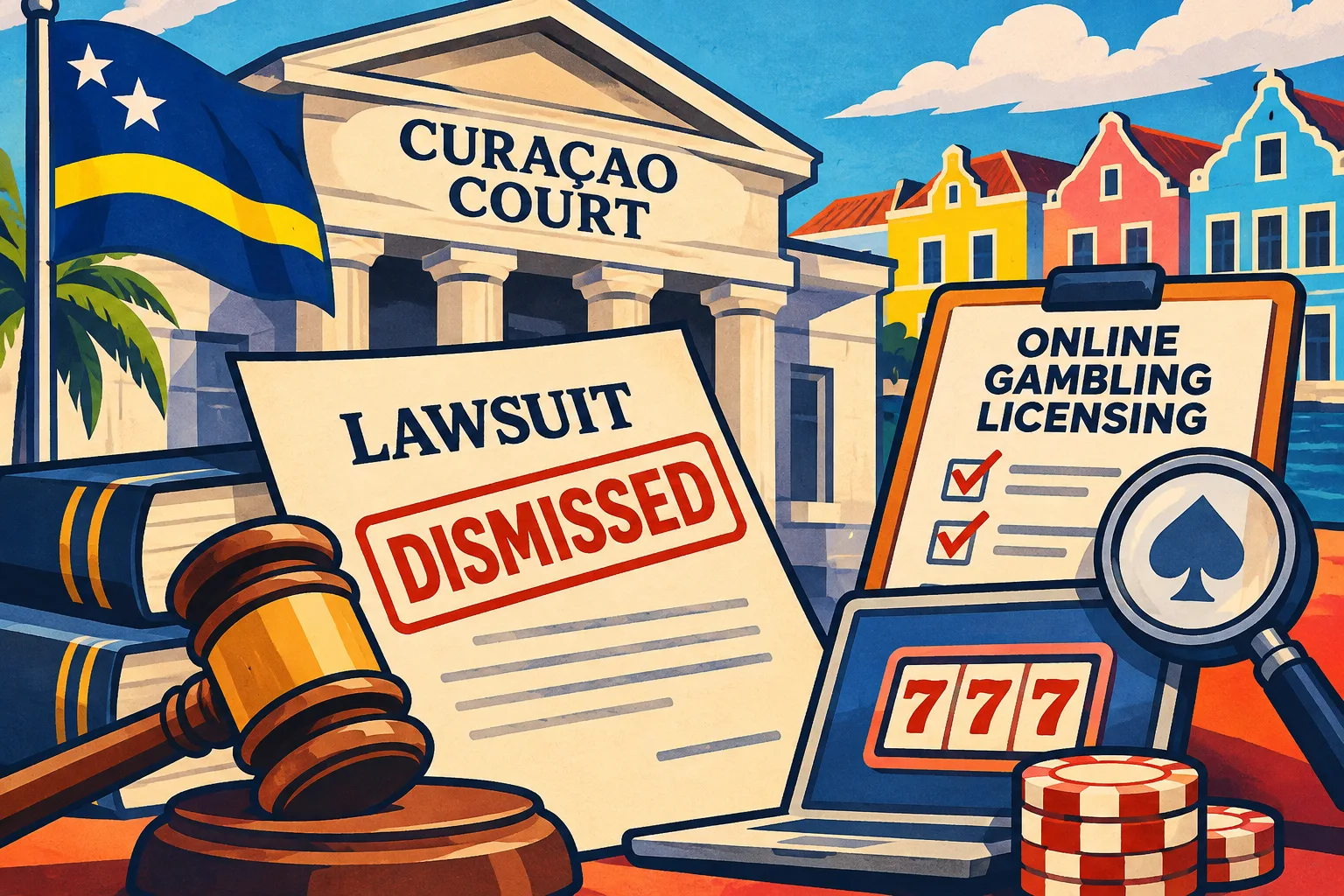

The Court of First Instance of Curaçao has dismissed claims brought by businessman Mario Fiorini, Phaedra Hanst and IGA Trust B.V. against financial-forensic researcher and publicist Luigi Faneyte over his publications about the island’s online gambling licensing system.
In its 2 November 2026 judgment, the court rejected demands to remove or correct publications, restrict future statements and make an advance damages payment of XCG 130,000. The plaintiffs were also ordered to pay Faneyte’s costs in the main proceedings.
The ruling is important for what it does — and does not — establish. The court did not find that corruption, fraud or other criminal conduct had occurred. Instead, it concluded that the plaintiffs had not shown that Faneyte acted unlawfully by raising and publishing concerns about a matter of significant public interest.
Court allowed scrutiny of licensing and oversight
Faneyte had filed criminal complaints in November and December 2024 concerning suspected irregularities around Curaçao’s gambling reform, licensing by the then-Gaming Control Board and possible conflicts of interest involving public and private-sector figures. His publications also discussed businesses connected to the BC.Game dispute and subsequent corporate failures.
The plaintiffs argued that his allegations were inaccurate, damaging and insufficiently proven. The court rejected the idea that unresolved allegations were automatically unlawful to publish simply because prosecutors had not established criminal offences.
According to detailed local reporting by Curaçao.nu, the judgment referred to unchallenged information that 155 gambling licences had been issued within a year while no staff were available to assess those applications. The court treated that background as part of the factual basis that allowed Faneyte to ask public questions about licensing and possible conflicts of interest.
The court also considered Fiorini’s own participation in public debate over gambling regulation. Antilliaans Dagblad reported that the court classified Faneyte as a “public watchdog” and gave greater weight in this case to his freedom of expression than to the plaintiffs’ privacy and reputation interests.
That does not turn Faneyte’s suspicions into judicial findings. The distinction matters: the court protected his right to investigate and publish adequately grounded concerns, but it did not certify the truth of every allegation contained in his complaints or commentary.
Anti-SLAPP counterclaim also failed
Faneyte brought a counterclaim asking the court to treat the case as an abusive Strategic Lawsuit Against Public Participation, or SLAPP, intended to silence him. The court rejected that request as well.
The judgment found that losing the main case did not by itself make the plaintiffs’ lawsuit abusive. Because Faneyte had made serious allegations capable of harming reputations, the plaintiffs were entitled to ask a court to test whether his statements were lawful.
The plaintiffs were ordered to pay XCG 6,000 in legal fees for the main proceedings, plus XCG 250 in subsequent costs and a possible additional XCG 150 if formal service of the judgment becomes necessary. Costs for the rejected counterclaim were set at zero.
For players, the case does not revoke, validate or change any specific casino licence, nor does it create a right to compensation. Its immediate significance is narrower: criticism of how Curaçao licenses and supervises online gambling can receive strong legal protection when it contributes to a public-interest debate and has a sufficient factual basis.
Curaçao’s National Ordinance on Games of Chance entered into force on 24 December 2024. The Curaçao Gaming Authority now issues and supervises online gambling licences under that framework, making scrutiny of licensing quality and regulatory oversight directly relevant to players who rely on a Curaçao licence as part of their assessment of an operator.
Email support@casinocomplaints.org with the article link and source. Editorial process →︎
Sources & checks
- Antilliaans Dagblad: Maltese Fiorini loses Faneyte caseantilliaansdagblad.com · Checked 9 Nov 2026
- Curaçao.nu: Faneyte wins court case on the gambling sectorcuracao.nu · Checked 9 Nov 2026
- Curaçao Chronicle: court rejects lawsuit against Faneytecuracaochronicle.com · Checked 9 Nov 2026
- Curaçao Gaming Authority: online gamingcga.cw · Checked 9 Nov 2026
Article updates1
Published from the news package.