
Escalation means taking an unresolved question to the next appropriate decision-maker. It does not mean sending the same angry message to every organisation with “gaming” in its name. Begin with the company responsible for your account, the market where it serves you and the procedure stated in its terms. A regulator listed on another version of the brand's website may not be the relevant body for your account.
The escalation ladder
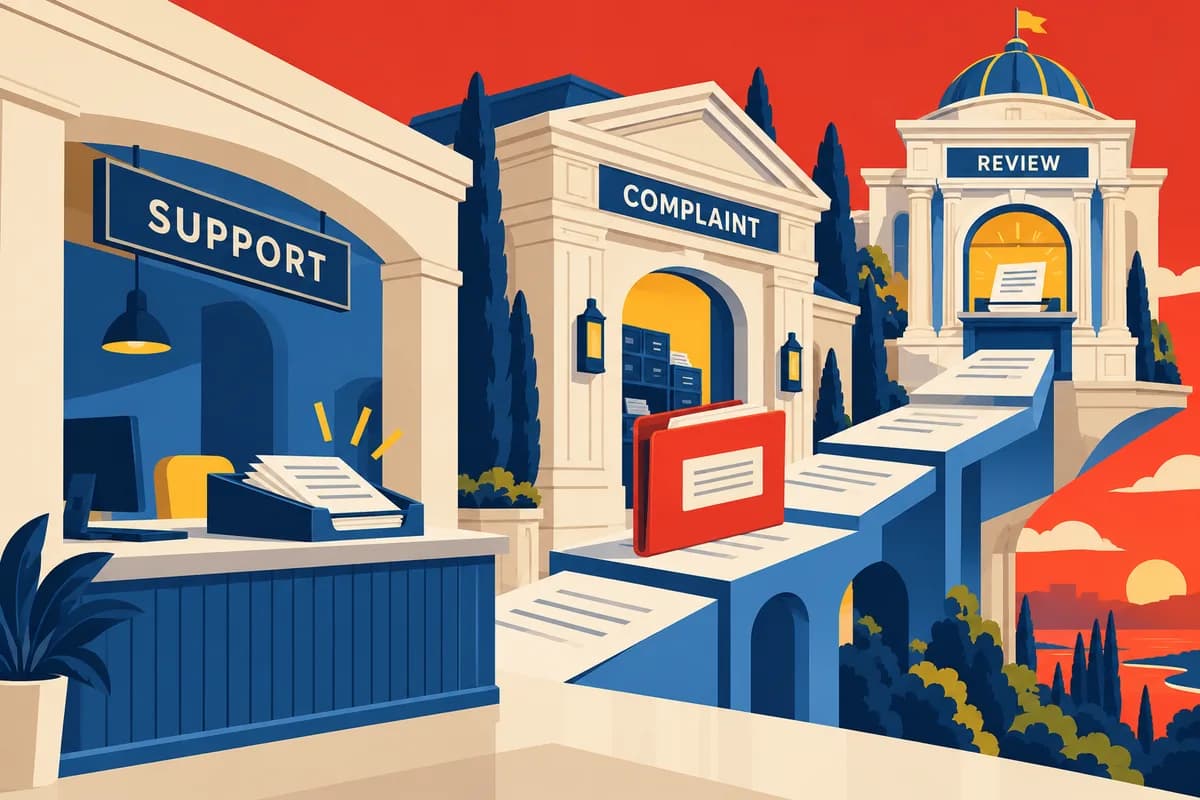
Most disputes move through the same stages, though not every stage exists for every operator. Knowing which one you are at tells you what to send and what to expect.
| Stage | Who | Purpose | What you need |
|---|---|---|---|
| Support | Casino live chat or email | Fix routine problems and get information | Account details and a clear question |
| Formal complaint | Operator's complaints team | A recorded decision on your dispute | Timeline, records, requested remedy |
| ADR | Dispute-resolution body named by the operator | Independent review of an individual dispute within its remit | Final response or proof the deadline passed |
| Regulator | Licensing authority | Oversight of the operator's compliance; may use reports to investigate | Licence details and a summary of the issue |
| Payment provider | Your bank, card issuer or wallet | Disputes about specific payments | Transaction record and correspondence |
| Legal advice | Adviser in your jurisdiction | Options beyond the above, including court | Your full case file |
Identify the operator and licence that apply to you
Read the terms on the domain where your account is held. Note the legal company named as your contracting party, its registration details and the licence it cites for your market. Brands that serve several countries often run different companies and licences for each. If a white-label platform holds the licence while another company markets the brand, the terms should say which one handles complaints. Confirm the licence on the regulator's own register; the casino checking guide explains how.
Turn a support conversation into a formal complaint
Find the operator's complaints address or form and label the submission as a formal complaint. Live chat is rarely treated as one, even if you use the word. State the decision you dispute, the amount and currency if relevant, and the outcome you request. Provide a short timeline and the decisive records. Ask for acknowledgement, a reference and the expected next step. Save the submission and its date separately from earlier live chats, because external deadlines often count from this date.
Keep using the same reference for meaningful updates. Opening several tickets can fragment the record. If support directs you to another internal team, ask whether the original complaint date remains recorded and what action that team will take. A new inbox does not by itself explain why an established complaint needs to begin again.
Ask for a clear final position
A final response should tell you what the operator decided and why. If the reply simply repeats “under review,” ask what remains outstanding and when you will next hear from it. If the operator says the matter is closed, ask for the applicable external dispute route and the information needed to use it. Keep any deadlock or final-position letter with your evidence; most ADR bodies will ask for it.
Separate a rejection of your argument from a failure to answer it. An external reviewer will need to see whether the casino addressed the transaction, term or document at the centre of the case. Describe the unanswered point precisely instead of saying only that you dislike the response.
Understand what ADR and a regulator may do
ADR is an alternative dispute-resolution process for an individual dispute within the body's remit. A regulator oversees compliance and may use reports to investigate an operator, but many regulators do not decide individual disputes or order payments to individual players. Those functions can overlap in communication but should not be treated as interchangeable. Check the body's own instructions, eligibility, operator coverage and evidence requirements before submitting.
Great Britain
For British licensed gambling, Gambling Commission guidance requires the operator's complaint process to finish within eight weeks, or earlier at deadlock, and provides access to free ADR for qualifying unresolved transactional disputes. The operator should identify its relevant provider. This is a British framework, not a deadline applicable to every casino with an international customer base.
Malta
The MGA's player-protection guidance describes referral to an ADR entity after the operator's internal dispute process and requires the procedure to identify that entity. Read the current procedure for your operator. Do not assume the MGA's public complaint form and a named ADR provider carry out exactly the same role, or that either route automatically awards the amount you claim.
Other licences
Authorities differ widely. Some publish complaint forms for players; others mainly accept regulatory reports; some licensing arrangements offer little in the way of individual dispute handling. Find the authority's website through the register, not through a link in the casino footer, and read what it says it does with player complaints. If it accepts complaints, follow its format exactly and send it the same pack you prepared for the operator.
What to expect once ADR accepts a case
An ADR body will usually first check that the dispute is within its remit: the operator is one it covers, the internal complaint has finished or the time limit has passed, and the dispute concerns something it can assess, such as a payment, a deduction or how a term was applied. It may then ask both sides for records and comments. Expect questions about the same points the operator raised, so answer them directly rather than repeating your original complaint. Schemes differ on whether a decision binds the operator, whether you can still go to court afterwards, and how long a review takes. Read those rules before you submit, not after the decision arrives.
The payment provider route
For disputes about a specific payment, such as a deposit never credited, your bank, card issuer or wallet provider may have its own dispute process. Describe the transaction truthfully, and do not present an authorised deposit as unauthorised. Raising a payment dispute can lead a casino to restrict or close the account, so consider how it interacts with any balance or withdrawal still pending. The missing deposit guide covers this in more detail.
Check old links before relying on them
The European Commission confirms that its Online Dispute Resolution platform closed on 20 July 2025. An ODR link still appearing in casino terms therefore does not submit a new complaint. The Commission now points users toward information about consumer redress bodies. That directory is a starting point for checking competence, not a universal replacement that can decide every online gambling dispute.
If a complaints page names an organisation you cannot locate or a provider that does not list the operator, ask the operator for an updated route in writing. Retain the outdated wording as part of the procedural issue. Do not send identity records to a look-alike website merely because it uses the name from an old set of terms.
Prepare a compact escalation pack
- The operator's legal name, the domain and the licence relied on.
- Your account identifier and complaint reference, shared privately.
- A one-paragraph summary: what happened, what you dispute and the remedy you want.
- A dated timeline of key events.
- The operator's final response, or proof that the required period has passed.
- A numbered list of attachments, each linked to an event in the timeline.
- A note of any parallel process, such as a payment dispute or public complaint.
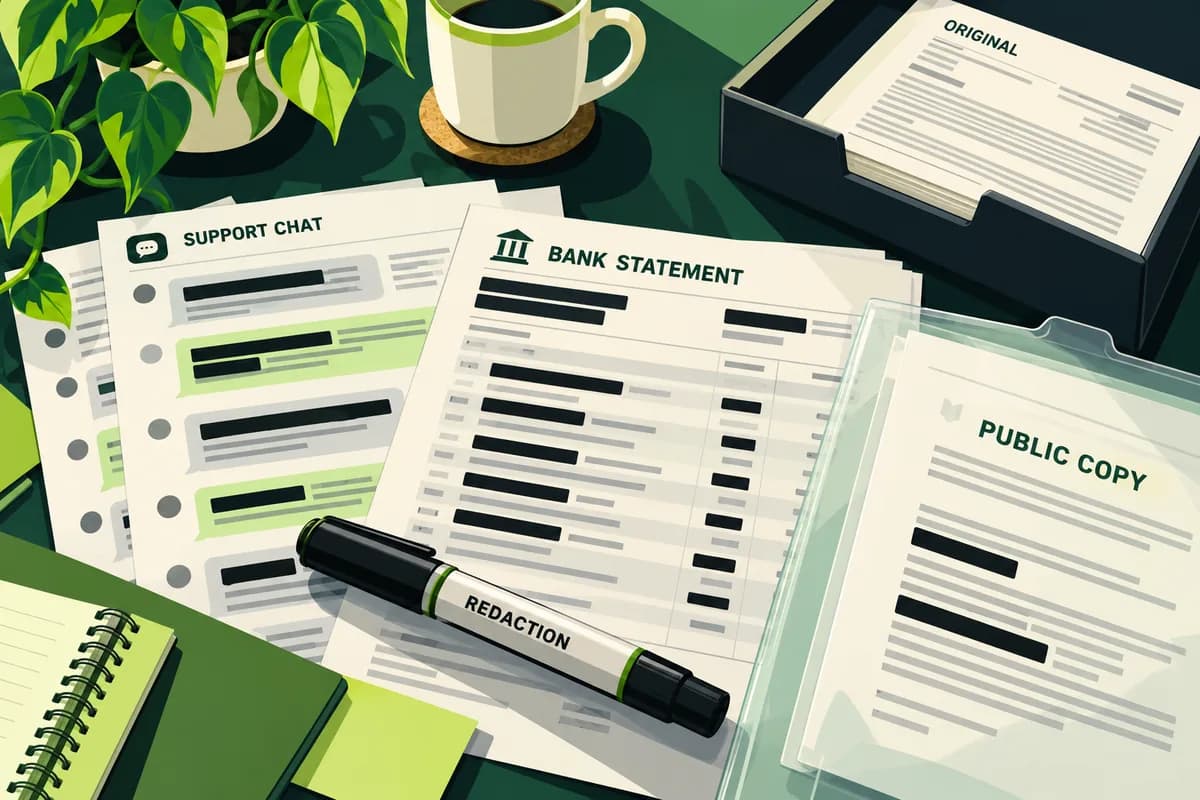
Write the opening so someone unfamiliar with the case can understand it in a minute. If a form asks a narrow question, answer that question rather than pasting the whole story into every field. Avoid making assertions about a regulator's powers unless its published procedure supports them. The evidence guide explains how to prepare the attachments without exposing private data.
A public complaint as a parallel track
Filing on CasinoComplaints.org can run alongside the formal routes. The complaints team reviews the case and, where a contact exists, invites the operator to respond in the same thread; how it works describes each step. We are not a regulator, court or ADR body, and a public case does not pause any deadline set elsewhere. Before filing, check the operator on Check casino and the blacklisted casinos list. Similar cases can show which arguments and records mattered, though their outcomes do not decide yours.
Follow the process and preserve your own deadlines
Save confirmations and respond to requests for additional information within the stated period. If you need more time, ask before the deadline and keep the answer. Many ADR bodies set a time limit for bringing a dispute after the operator's final response, so do not let a case sit. If a claim needs court proceedings or specialist advice, seek assistance appropriate to your jurisdiction rather than treating a website conversation as a substitute.
Beware of “recovery” offers
Players with a public dispute are sometimes contacted by people claiming they can recover funds for an upfront fee, or posing as a regulator, ADR body or our team. Legitimate dispute bodies do not cold-call you to ask for payment, your casino password or remote access to your device. CasinoComplaints.org never charges players. If someone asks for a “release fee” to unlock a withdrawal, treat it as a scam and do not pay.
Record the outcome accurately
Update your public case when an external body accepts, declines or decides the dispute, describing the actual result. Acceptance for review is not a finding in your favour. A settlement proposal is not a completed payment. If you reach the end of the available routes without the result you wanted, say so plainly; an accurate record of an unresolved dispute still helps the next player decide where to deposit.
Email support@casinocomplaints.org with the article link and source. Editorial process →︎
Questions answered
Can I send a complaint straight to any regulator?
First identify the operator, licence, market and body’s role. Some bodies handle regulatory reports, while an ADR provider may handle the individual transaction dispute. Follow the applicable published procedure.
Is eight weeks a universal casino complaint deadline?
No. It is part of the British framework described here. Other markets and providers have their own procedures and eligibility requirements.
Can I still use the EU ODR platform?
No. The European Commission states that the platform closed on 20 July 2025. Check the current competent dispute-resolution body instead of relying on an old ODR link.
Does a live chat count as a formal complaint?
Usually not. Use the operator’s stated complaints address or form, label your message as a formal complaint and ask for a reference. Keep the date, because external deadlines often count from it.
Will a regulator get my money back?
Many regulators do not decide individual disputes or order payments to players; they oversee the operator. ADR bodies may review individual disputes within their remit. Check each body’s published role before relying on it.
Someone offered to recover my winnings for a fee. Is that legitimate?
Treat it with great caution. Legitimate dispute bodies do not cold-call players asking for fees, passwords or remote access. CasinoComplaints.org never charges players.
Sources & checks
Article updates2
First publication. Primary sources checked and market scope identified.
Expanded and restructured around one player problem, with a new FAQ and checked sources.